One of the most costly mistakes we see from contractors in Irvine is assuming the ground behaves uniformly across a project site. The city sits on a mosaic of ancient alluvial fans, old river terraces, and areas that were graded or filled decades ago for master-planned communities. When a building's corner settles twice as much as the opposite side, you get cracked slabs, jammed doors, and foundation repairs that could have been avoided. That is where a proper differential settlement analysis comes in, combining site-specific soil borings with consolidation testing to predict how much each foundation element might move. We often recommend pairing this with a estudio de mecánica de suelos to map variability across the lot before setting footing depths.
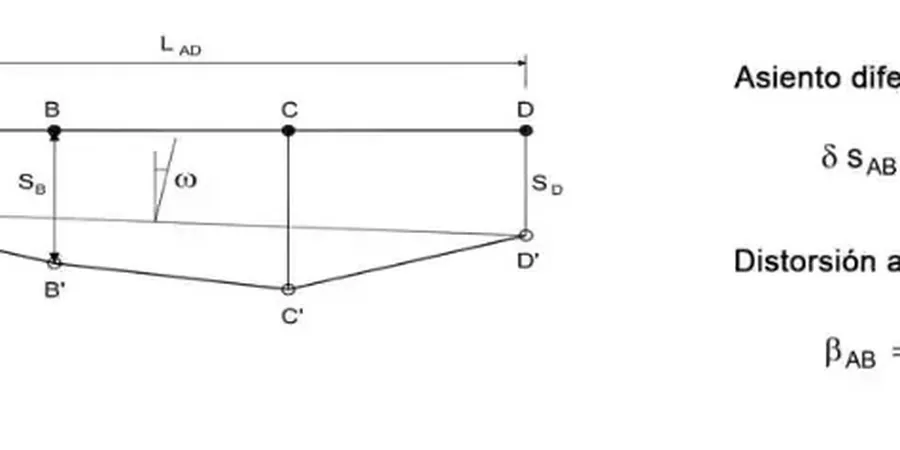
Differential settlement in Irvine often traces back to variable fill thickness under master-planned slabs, not weak soil alone.
Methodology and scope
Local considerations
Compare a site in Northpark with one near the Irvine Spectrum. The Northpark parcel sits on relatively uniform older alluvium with consistent sand layers, while the Spectrum area often has variable fill from the original ranch grading. In the latter, differential settlement between a column on cut and a column on 15 feet of fill can exceed an inch, enough to crack a tilt-up panel. The key difference is the compressibility of the fill and the depth to competent bearing strata. A thorough differential settlement analysis flags these transition zones before concrete is poured, allowing for deep foundations or ground improvement where needed.
Applicable standards
IBC 2021 Chapter 18 – Soil Investigations and Foundations, ASCE 7-22 – Minimum Design Loads (settlement criteria), ASTM D2435 – One-Dimensional Consolidation, ASTM D4546 – Swell-Consolidation of Soils, City of Irvine Grading and Drainage Manual (2020)
Associated technical services
Consolidation Testing and Settlement Prediction
One-dimensional and triaxial consolidation tests on undisturbed samples, with time-rate curves for primary and secondary settlement. Output includes immediate, primary, and creep settlement estimates.
Expansive Soil Characterization
Swell-consolidation tests (ASTM D4546) to quantify heave potential and differential movement under moisture changes. Includes classification by expansion index per UBC Standard 29-2.
Differential Movement Contour Mapping
Geostatistical interpolation of boring data to create isopach maps of fill thickness and settlement contours. Identifies high-risk zones for differential movement and recommends foundation type or ground improvement.
Typical parameters
Frequently asked questions
How much does a differential settlement analysis cost in Irvine?
For a typical residential lot or small commercial site, the cost ranges between US$850 and US$1,740 depending on the number of borings, laboratory tests required, and site accessibility. Larger projects with multiple structures are quoted individually.
What is the difference between total settlement and differential settlement?
Total settlement is how much the entire foundation sinks vertically. Differential settlement is the difference in movement between two points on the same structure. Building codes limit differential settlement (typically 1/300 of the span) because it causes structural distress, while total settlement may be tolerable if uniform.
How long does a differential settlement analysis take from field work to report?
Field drilling and sampling usually take one to two days. Laboratory consolidation tests require two to four weeks because each load increment must reach 100% primary consolidation. The final report with settlement predictions is delivered within three to four weeks from the start of field work.