A common mistake we see in Irvine is assuming shallow spread footings will work on every lot. The problem is the alluvial fan deposits – layers of silty sand, gravelly clay, and old river channel fills that vary drastically within a single block. A builder on MacArthur Boulevard planned a four-story mixed-use project with a 3,000-psf bearing value. After three test pits we found a buried channel with loose silty sand 12 feet deep. The solution was a micropile foundation. We designed 12-inch diameter piles socketed into the older Pleistocene terrace material 25 feet down, spaced to keep column loads under 80 kips per pile. Before we mobilized, we ran an ensayo SPT at every pile location to confirm the N-values matched the design assumptions. That step saved the client from over-designing by 15%.
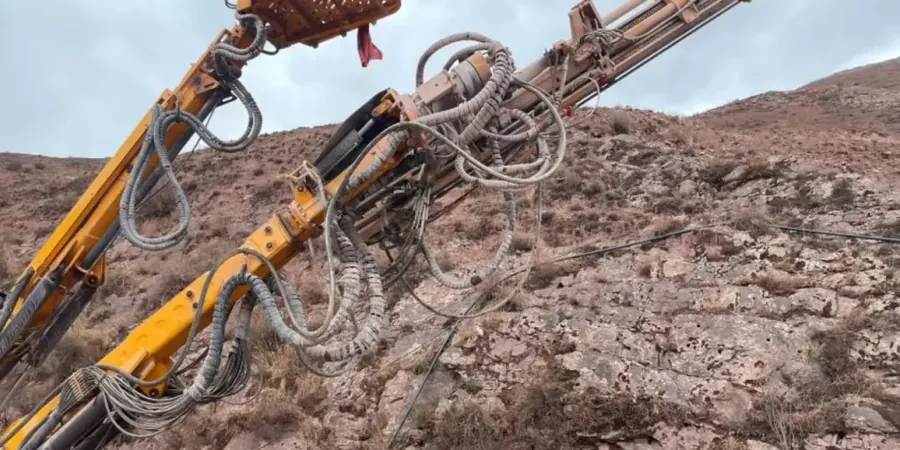
Micropile load testing in Irvine alluvium typically shows 30-40% higher capacity than initial design estimates once bond stresses are verified.
Methodology and scope
- Bond stress between grout and soil: 15 psi in clay, 35 psi in sandstone
- Factor of safety on structural steel: 2.0 per IBC 2018
- Load testing per ASTM D1143: one compression test per 20 piles
Local considerations
Irvine sits on the eastern edge of the Peninsular Ranges, underlain by Pleistocene alluvial fan deposits and older terrace gravels. The biggest risk we see is the variability of the sand layers – one day you hit clean, dense sand with N-values of 40, and the next you find a loose silty lens with N-values of 8. That makes it nearly impossible to rely on a single boring. We also have to account for the Newport-Inglewood fault zone 12 miles west; ASCE 7-16 maps Site Class D for most of Irvine. Seismic loading from a magnitude 6.5 event can double the axial demand on a micropile group. We always run a site-specific response spectrum analysis and check for liquefaction in the saturated sands below 20 feet. Ignoring that variability has led to differential settlements of over 3 inches in at least two Irvine projects we reviewed.
Applicable standards
IBC 2018 Section 1810 – Deep Foundations, ASCE 7-16 Chapter 12 – Seismic Load Requirements, ASTM D1143 – Piles Under Static Axial Compressive Load, FHWA-NHI-16-072 – Micropile Design and Construction Manual, ACI 543R – Design, Manufacture, and Installation of Concrete Piles
Associated technical services
Preliminary Micropile Sizing
Using site-specific soil data and column loads, we estimate pile diameter, length, and spacing within 48 hours.
Structural Design & Detailing
We produce pile cap layouts, reinforcement schedules, and connection details to the superstructure, compliant with IBC and ACI.
Seismic Micropile Design
We evaluate site response, liquefaction potential, and kinematic pile-soil interaction for seismic demand per ASCE 7-16.
Load Test Planning & Interpretation
We design and oversee compression and tension load tests per ASTM D1143, then back-calculate bond stresses for production piles.
Typical parameters
Frequently asked questions
How deep are micropiles typically designed in Irvine?
Depths range from 20 to 40 feet depending on the soil profile. We target a minimum socket of 10 feet into the older Pleistocene terrace deposits or dense sand layers with N-values above 30.
What is the typical cost range for a micropile design in Irvine?
Design fees for a typical 20- to 40-pile project in Irvine fall between US$1,340 and US$4,600. This includes geotechnical review, structural calculations, and one round of shop drawing revisions.
Can micropiles resist uplift from seismic loads?
Yes. We design the steel reinforcement and grout bond length to resist net uplift forces. In Irvine's Site Class D soils, we typically apply a factor of safety of 2.5 on bond stress for tension loads.
How do I know if my site needs micropiles instead of driven piles?
Micropiles work best on constrained urban lots with low headroom or tight access, or where soil variability makes driven piles unreliable. If your site is within 100 feet of an existing structure, micropiles minimize vibration and settlement risk.