In Irvine, we often see that the alluvial soils from the Santa Ana River floodplain create a tricky foundation for road projects. The subsurface profile here can shift from loose sands to stiff clays within a few feet, which directly impacts the subgrade support values you can rely on. When we start a pavement design study, the first thing we do is run a thorough field investigation to map out these layers. Before any pavement section is finalized, it's smart to get a complete picture through a study of soil mechanics that covers both strength and compaction characteristics.
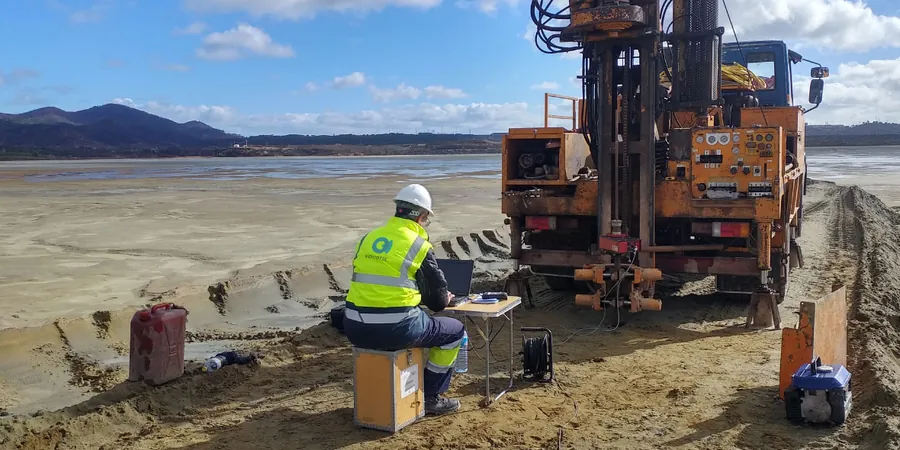
In Irvine, the alluvial soil variability between the Santa Ana River and San Diego Creek zones demands site-specific subgrade testing before any pavement design.
Methodology and scope
Local considerations
The dry summers and occasional heavy winter rains in Orange County create a moisture cycling effect that can degrade subgrade support over time. When a pavement is built during the dry season, the soils appear stiff and strong, but after the first wet winter the same subgrade can soften significantly. Weve seen pavement failures in Irvine where the design assumed a higher CBR than what the soil delivered under saturated conditions. To mitigate this, we always recommend soaked CBR tests and a resilient modulus estimation that accounts for seasonal variation.
Applicable standards
ASTM D1883 (CBR), ASTM D698 (Standard Proctor), AASHTO T-307 (Resilient Modulus), ASTM D4318 (Atterberg Limits), ASTM D2487 (Unified Soil Classification)
Associated technical services
Subgrade Investigation & CBR Testing
We perform test pits and boreholes to recover disturbed and undisturbed samples, then run soaked CBR and Proctor tests to determine the design subgrade strength for both flexible and rigid pavements.
Pavement Layer Analysis
Using the subgrade data, we analyze base and subbase material requirements, recommend thicknesses per AASHTO 1993 or Mechanistic-Empirical design, and verify material compaction during construction.
Resilient Modulus (Mr) Evaluation
For high-traffic roads or airport pavements, we determine the resilient modulus through cyclic triaxial testing, which provides a more accurate input for modern pavement design methods.
Typical parameters
Frequently asked questions
What is the typical subgrade CBR for pavement design in Irvine?
The soaked CBR for native alluvial soils in Irvine ranges from about 3% in the younger deposits near San Diego Creek to 15% in the older alluvium east of the 5 freeway. We always test at the specific project location.
How much does a road geotechnics study cost in Irvine?
For a standard pavement design study in Irvine, the cost typically falls between US$810 and US$4,460 depending on the number of test pits, laboratory tests (CBR, Proctor, Atterberg), and the size of the project area.
What's the difference between soaked and unsoaked CBR for subgrade design?
Unsoaked CBR tests measure the strength at the natural moisture content, while soaked CBR submerges the sample for 96 hours to simulate the worst-case wet season condition. In Irvine, soaked values can be 30-50% lower than unsoaked, so we always use soaked results for design.
Do I need a resilient modulus test for a residential street in Irvine?
For low-volume residential streets with less than 100 daily truck passes, the standard CBR-based AASHTO 1993 method is sufficient. We recommend resilient modulus testing for arterial roads, bus routes, or any pavement expected to carry heavy loads.