Irvine sits on alluvial terraces and ancient marine sediments that create highly variable infiltration rates across short distances. The city's semi-arid climate with periodic heavy winter storms means surface drainage design cannot rely on average values alone. We run double-ring infiltrometer tests to measure in-situ hydraulic conductivity, not lab approximations. For smaller excavations where access is tight, the Porchet method (single-ring falling head) gives a practical alternative. Both follow ASTM D3385-18 procedures with pre-soaking to account for initial moisture deficits typical of Southern California soils. Before committing to a basin size, we often combine infiltration data with a geotechnical study to understand soil layering and groundwater depth.
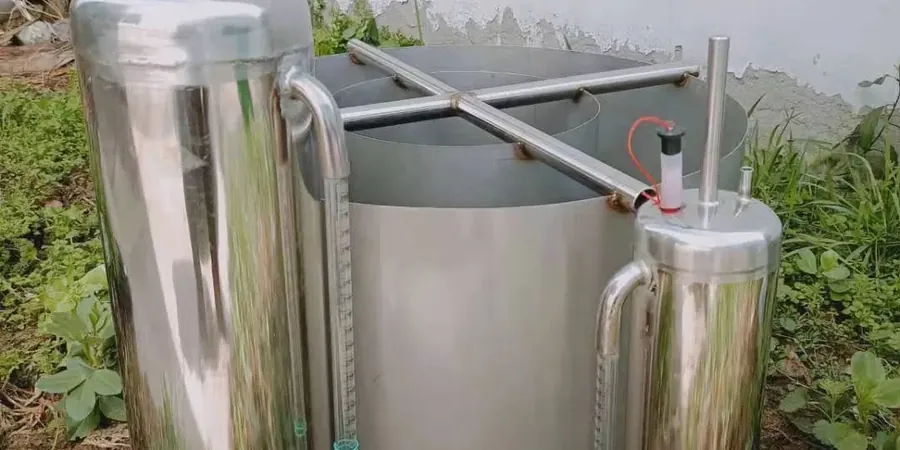
In Irvine, one infiltration test per lot is rarely enough — rates can drop tenfold within 50 meters due to alluvial layering.
Methodology and scope
Local considerations
We worked on a mixed-use development near the Irvine Spectrum where the initial consultant ran a single Porchet test and assumed 8 cm/h infiltration. The site had a buried clay lens from an old channel — actual rates came out at 0.8 cm/h. The basin volume was undersized by 60%, and the city required redesign during permit review. A proper three-point double-ring campaign upfront would have caught the lens early and avoided a $40,000 redesign. That kind of risk is avoidable when you test the right way from day one.
Applicable standards
ASTM D3385-18: Standard Test Method for Infiltration Rate of Soils in Field Using Double-Ring Infiltrometer, ASTM D5093-15: Standard Test Method for Field Measurement of Infiltration Rate Using a Double-Ring Infiltrometer with a Sealed-Inner Ring, IBC 2021 Section 1807: Subsurface Drainage and Foundation Waterproofing, Orange County Flood Control District — Storm Water Quality Management Manual (2023)
Associated technical services
Standard Double-Ring Infiltrometer
Full ASTM D3385-18 procedure with pre-soak, constant-head measurement, and steady-state Ksat calculation. Includes three test points per drainage zone, field log, and certified report. Suitable for commercial and residential stormwater compliance.
Porchet (Single-Ring) Falling Head
Rapid screening test for small excavations, trench drains, or retrofit projects. Uses a 30 cm open ring with falling-head measurement and correction for lateral divergence. Economical when quick feasibility data is needed before final design.
Integrated Infiltration + Soil Investigation
Combines double-ring tests with soil boring, grain-size analysis, and groundwater monitoring. Delivers a complete hydraulic profile for LID basins, bioretention cells, or infiltration galleries. Includes recommendations for underdrain placement if native rates are marginal.
Typical parameters
Frequently asked questions
How many infiltration tests does Irvine require for a new development?
The city typically requires a minimum of three double-ring infiltrometer tests per drainage management area (DMA), spaced at least 30 m apart to capture spatial variability. For projects over 1 acre, we recommend one test per 0.5 acre to meet the Orange County Flood Control Manual guidelines. Our standard protocol includes a pre-soak phase of at least 30 minutes to account for initial moisture deficits common in Irvine's sandy loam soils.
What is the difference between a double-ring and a Porchet test?
The double-ring infiltrometer uses two concentric rings — the outer ring buffers lateral flow so the inner ring measures true vertical infiltration. Porchet uses a single ring and applies a correction factor for lateral divergence, which can overestimate Ksat by 20-40% in low-permeability soils. For Irvine's clayey silt zones, the double ring is preferred for regulatory submittals. Porchet is acceptable for preliminary screening in sandy areas where correction factors are well understood.
How much does an infiltration test cost in Irvine?
A standard double-ring test with three points and a certified report typically ranges between US$300 and US$420 per point, depending on site access and mobilization distance. The integrated package (test + soil boring + grain-size analysis) runs higher but provides a complete hydraulic profile for LID design. We provide firm quotes after a brief site review.
Can infiltration tests be done during wet weather?
ASTM D3385-18 recommends testing when the soil moisture is below field capacity. In Irvine's Mediterranean climate, that means avoiding the rainy season (November to March) unless the site is covered. Testing during active rain or within 48 hours of a storm can yield artificially high rates due to preferential flow through macropores. We schedule tests in dry conditions and pre-soak to a steady state — never test on saturated ground.