Irvine sits on a mix of older alluvial fan deposits and younger Holocene sediments, with groundwater typically encountered between 10 and 25 feet below grade depending on the specific tract and proximity to San Diego Creek. Those conditions make undisturbed sampling essential when you need to evaluate true soil cohesion, consolidation behavior, or shear strength without disturbing the natural fabric. Unlike standard split-spoon samples, Shelby tube samples preserve the in-situ structure, which is critical for advanced lab tests like triaxial compression or oedometer consolidation. In our experience, pairing this method with a resistivity survey helps identify hidden gravel layers that can pinch the thin-walled tube before you even reach the target depth. For projects near the Great Park or the Irvine Business Complex, where bearing capacity directly drives foundation costs, undisturbed sampling provides the reliable data that SPT blow counts alone cannot offer.
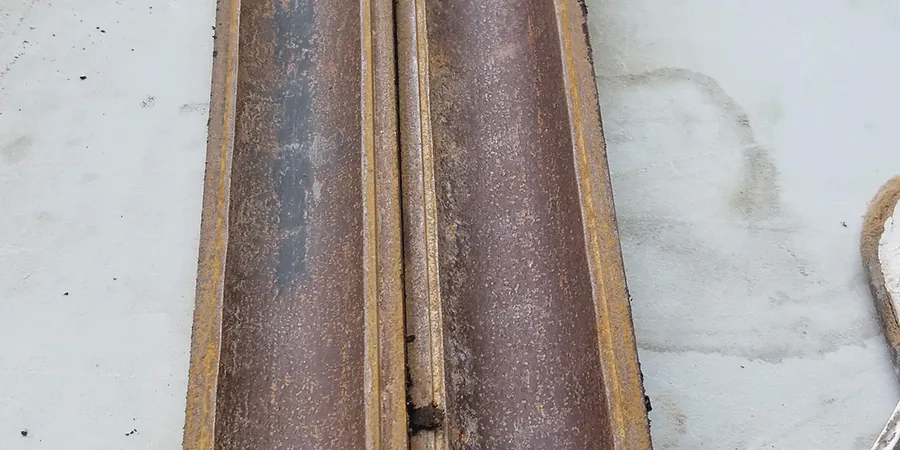
In Irvine's mixed alluvial profile, Shelby tube sampling preserves the natural soil structure that SPT cannot capture, directly improving foundation design reliability.
Methodology and scope
Local considerations
Irvine's Mediterranean climate means the near-surface soils dry out significantly between May and October, creating a hard crust that can deflect or collapse the thin-walled Shelby tube if the advance rate is not reduced. Conversely, during the wet winter months, perched water tables can soften clay layers to the point where the sample loses integrity during extraction. The team adjusts the push speed and sometimes pre-reams the upper crust with a larger auger before inserting the tube. Another common issue is gravel stringers within the older alluvium — a single cobble can ruin the tube edge and compromise the entire sample. That is why we always run a [MASW survey](/masw-vs30/) beforehand to map velocity contrasts that often correlate with coarse layers. Without that precaution, you risk pulling up a damaged tube with no usable recovery.
Applicable standards
ASTM D1587-15: Standard Practice for Thin-Walled Tube Sampling of Fine-Grained Soils, ASTM D4220-17: Standard Practices for Preserving and Transporting Soil Samples, ASTM D2487-17: Standard Practice for Classification of Soils for Engineering Purposes (Unified Soil Classification System), California Building Code (CBC) 2022, Chapter 18: Soils and Foundations
Associated technical services
Laboratory Triaxial Testing on Undisturbed Samples
Consolidated-undrained (CU) or unconsolidated-undrained (UU) triaxial tests on Shelby tube specimens, providing effective stress parameters (c', phi') for slope stability and foundation design in Irvine's stiff clays and silty sands.
One-Dimensional Consolidation (Oedometer) Tests
Standard or incremental-load consolidation tests on undisturbed samples to determine preconsolidation pressure, compression index, and coefficient of consolidation — essential for estimating long-term settlements in Irvine's compressible alluvial deposits.
Typical parameters
Frequently asked questions
When is undisturbed sampling required instead of standard SPT?
Undisturbed sampling is required whenever the design depends on soil strength or compressibility measured in the laboratory. Common cases include tall buildings (settlement analysis), retaining walls (shear strength), and seismic site response studies where modulus reduction curves need to be derived from triaxial tests. In Irvine, city geotechnical reports almost always request Shelby tube samples at 5-foot intervals below the active zone for projects over three stories.
How much does undisturbed sampling (Shelby tube) cost in Irvine?
The typical cost for Shelby tube sampling in Irvine ranges from US$420 to US$1,110 per sample, depending on depth, number of tubes, and whether the rig is already mobilized. This price includes the tube, extraction, sealing, and standard handling, but excludes laboratory testing. For a typical 10-sample program, the total often falls between US$5,500 and US$8,000 including mobilization.
What can go wrong with Shelby tube samples in Irvine's soils?
The most common problems are tube collapse in loose sands, sample disturbance from gravel stringers, and moisture loss during hot summer days. Thin-walled tubes can also buckle if the soil is too dense or if the push rate exceeds 1 ft/min. To avoid these issues, we pre-ream the upper crust, reduce push speed in stiff zones, and seal samples within 30 minutes of extraction. A proper field log noting recovery and any visible defects is mandatory for lab interpretation.