The subsurface of Irvine is dominated by deep alluvial deposits from the Santa Ana River system, with interbedded layers of silty sand, clay, and gravel that often sit on the older San Pedro Formation. Groundwater can be encountered as shallow as 10 to 15 feet in the northern sections near the Tustin border, while the southern parts closer to the San Joaquin Hills show a much deeper water table. For any grouting design in Irvine, we start by characterizing these layers through careful field testing, often using a permeability test at the site to define the grout take and injection pressures before writing a single specification.
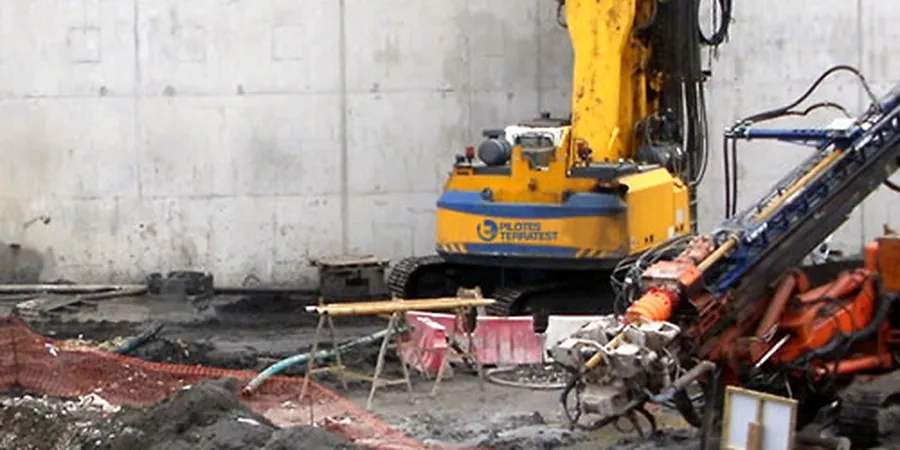
A one-size-fits-all grouting mix fails in Irvine's layered stratigraphy. Each injection program must be tuned to the local gradation and moisture content.
Methodology and scope
Local considerations
The most frequent mistake we see in new developments around the Great Park area is assuming the native sand is uniform. Builders often skip a detailed grouting design and rely on a generic mix that either washes out in the coarser layers or fails to penetrate the clay seams. The result is uneven ground improvement, differential settlement under slab loads, and costly rework. We have had to redesign injection programs mid-project because the initial parameters were pulled from a different site. A proper grouting design in Irvine cannot ignore the variability of the alluvial fan deposits.
Applicable standards
ASTM D5092 – Standard Practice for Design and Installation of Groundwater Monitoring Wells, ASCE Grouting Committee Guidelines, IBC Chapter 18 – Soils and Foundations
Associated technical services
Permeation Grouting
Injection of low-viscosity grout into the pore spaces of sandy soils to reduce permeability and increase strength. Ideal for the loose alluvial sands found near the Santa Ana River channel and business parks.
Compaction Grouting
High-pressure injection of a stiff, low-slump grout to densify loose or collapsible soils. Applied in clay-rich zones or under existing structures where settlement control is critical.
Typical parameters
Frequently asked questions
What is the typical cost range for a grouting design study in Irvine?
Depending on the site complexity and number of injection test panels, the total cost for a grouting design study in Irvine typically falls between US$1,080 and US$4,430. This includes field permeability testing, mix design trials, and a detailed injection plan.
How do I know if my Irvine project needs grouting or just a standard foundation?
If your site has loose sand layers, high groundwater flow, or evidence of voids from old agricultural use (common in former citrus groves), a standard foundation may suffer differential settlement. A grouting design in Irvine is warranted when the bearing stratum is either too permeable or too compressible for conventional footings.
What grout type works best for the alluvial soils in Irvine?
Microfine cement grouts work well in the silty sands because they penetrate tighter pores without bridging. For the coarser gravel lenses, a standard Portland cement grout with a low water-cement ratio is more economical. Chemical grouts like sodium silicate are reserved for emergency cutoff walls where rapid gel time is needed.
How long does a grouting design take before field injection starts?
Once we have the soil logs and permeability data, the design phase typically takes two to three weeks. This includes calculating injection pressures, spacing, and verifying the mix through lab trials. For urgent projects, we can compress the schedule to ten working days.