When we roll the hydraulic excavator onto a site in Irvine, the first thing we do is set up the test embankment area with survey stakes and settlement plates. For a preloading with surcharge design, we typically bring in a fleet of dump trucks to place granular fill in controlled lifts, each one compacted to a specified density. The whole setup looks like a small earth dam taking shape in the middle of a flat lot. We monitor pore pressure dissipation using piezometers installed at multiple depths, and we track vertical movement with optical survey targets. In our experience, the young alluvial soils found across much of Irvine, especially near the San Diego Creek corridor, respond predictably to staged loading when the design accounts for the actual consolidation parameters.
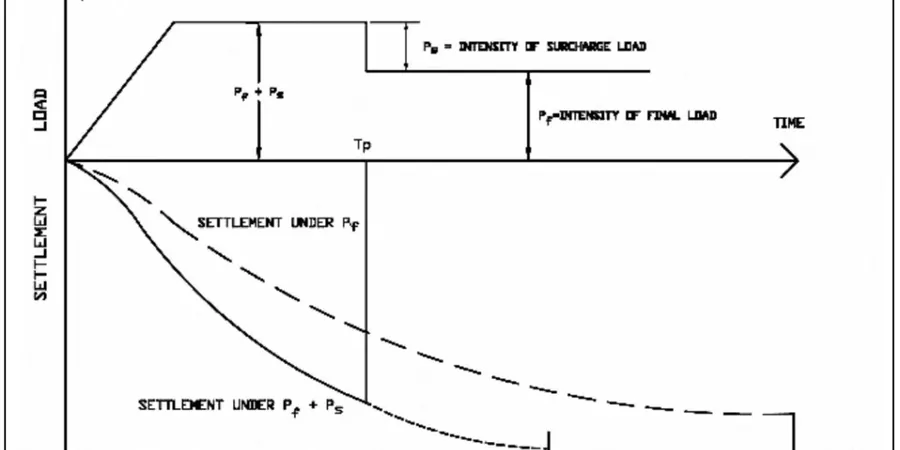
Staged loading with real-time piezometer and settlement plate monitoring gives us the confidence to design surcharge heights that actually work.
Methodology and scope
Local considerations
Irvine sits in a region with a moderate seismic hazard, and the shallow groundwater table amplifies the risk of liquefaction in loose sandy layers. If the preloading with surcharge design does not account for the cyclic softening potential of the clayey silts, the post-construction settlement under seismic loading can exceed allowable limits. We always run cyclic triaxial tests on representative samples and cross-check the results with the NCEER liquefaction evaluation procedure. In our lab, we flag any layer with a factor of safety below 1.1 and recommend additional ground improvement measures before the surcharge is removed.
Applicable standards
ASTM D1586-18 (Standard Test Method for Standard Penetration Test), ASTM D2435-20 (Standard Test Methods for One-Dimensional Consolidation Properties of Soils), IBC 2021 Chapter 18 (Soils and Foundations), ASCE 7-22 Chapter 11 (Seismic Design Criteria)
Associated technical services
Consolidation Testing (Oedometer)
One-dimensional consolidation tests per ASTM D2435 on undisturbed samples from the site. We determine preconsolidation pressure, compression index, and coefficient of consolidation for the design of surcharge height and duration.
Field Monitoring with Piezometers and Settlement Plates
Installation and daily readout of vibrating-wire piezometers and optical settlement plates. Data is logged and plotted against time to verify the rate of consolidation and adjust the surcharge schedule if needed.
Shear Strength Characterization
Unconsolidated-undrained triaxial tests (ASTM D2850) and direct shear tests (ASTM D3080) on clay and silt samples to provide strength parameters for stability analysis of the surcharge fill and long-term foundation design.
Typical parameters
Frequently asked questions
How long does a typical preloading with surcharge design project take in Irvine?
The monitoring period usually ranges from 3 to 9 months, depending on the clay layer thickness, the degree of consolidation required, and the drainage conditions. We provide an initial estimate after running consolidation tests on site samples.
What is the typical cost range for preloading with surcharge design in Irvine?
For a standard project including field monitoring and lab testing, the cost typically falls between US$810 and US$2,170. This range covers piezometer installation, settlement plate surveys, consolidation tests, and the final engineering report. Larger sites with deeper clay layers may require a higher budget.
Do I need a preloading surcharge if the building has a deep foundation?
Not always. If the foundation piles or caissons extend to competent bearing strata below the compressible clay, the surcharge may not be needed. However, for mat foundations or shallow footings on soft ground, preloading is often the most cost-effective way to control differential settlement.
How do you determine the correct surcharge height for a site in Irvine?
We run consolidation tests on undisturbed samples and model the expected settlement under the proposed building load. The surcharge height is then calculated to achieve the target preconsolidation stress, usually 20% to 50% higher than the design load, to reduce post-construction settlement to acceptable levels.