The dry coastal climate of Irvine shapes its near-surface soils – typically stiff alluvial sands and silty clays with variable gravel lenses. In our experience, these deposits require careful bearing capacity evaluation before any shallow foundation design can proceed. The Mediterranean dryness keeps groundwater deep, but seasonal infiltration can soften the upper few feet. We always start with a site-specific subsurface profile to map layer stiffness and moisture variation. That data directly feeds into allowable bearing pressure calculations under IBC Chapter 18. For projects in the Great Park area or near the San Diego Creek channel, we often combine test pits with a placa de carga to verify modulus of subgrade reaction on site. The goal is a simple, cost-effective spread footing or mat that won't settle unevenly under service loads.
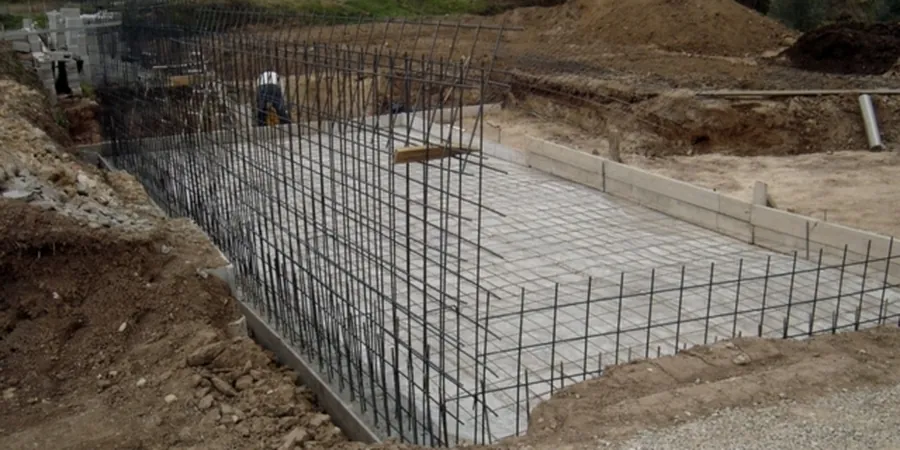
In Irvine's alluvial soils, a properly executed shallow foundation design eliminates differential settlement risk even under moderate seismic loads.
Methodology and scope
- Standard Penetration Tests at 5-foot intervals (ASTM D1586) to measure blow counts and relative density
- Atterberg limits and natural moisture content on cohesive layers to detect expansive potential
- Bearing capacity analysis using Terzaghi's and Meyerhof's methods with local soil parameters
Local considerations
Irvine's rapid urban growth since the 1970s created large tracts of engineered fills, but also pockets of poorly compacted material from earlier grading. The biggest geotechnical risk for shallow foundation design here is differential settlement across fill-native soil interfaces. We've seen cases where a house on cut settled 0.5 inches while a neighboring pad on fill dropped 2 inches. Another risk is liquefaction in loose saturated sands near the Santa Ana River floodplain – a M6.5 earthquake could trigger lateral spreading under footings. That's why our shallow foundation design always checks the liquefaction potential using NCEER procedures and includes a presurometro test where loose layers are suspected. We then adjust footing width or embedment depth to bypass problematic strata.
Explanatory video
Applicable standards
IBC 2021 Chapter 18 – Soils and Foundations, ASCE 7-16 Section 11.4 – Site Class Determination, ASTM D1586-18 – Standard Test Method for SPT
Associated technical services
Geotechnical Soil Investigation
Drilling, sampling, and laboratory testing to characterize soil profiles up to 30 feet deep. Includes SPT, moisture-density, and consolidation tests for settlement estimates. Results are used to assign allowable bearing capacities per IBC.
Foundation Engineering Report
Detailed bearing capacity analysis, settlement predictions, and construction recommendations. We address expansive soil mitigation, drainage around footings, and seismic site class. The report serves as the basis for structural engineers and plan check approval.
Typical parameters
Frequently asked questions
What is the typical allowable bearing capacity for shallow foundations in Irvine?
Based on our local SPT data, medium dense sands and stiff clays in Irvine yield allowable bearing capacities between 3,000 and 5,000 psf for isolated footings. Continuous footings on the same soils may use 2,500–4,000 psf. These values assume a factor of safety of 3 and a maximum total settlement of 1 inch.
Does shallow foundation design in Irvine require seismic site classification?
Yes. The 2021 IBC requires Site Class determination per ASCE 7-16 using vs30/" data-interlink="1">shear wave velocity (VS30) or SPT blow counts. Most of Irvine falls into Site Class C (very dense soil) or D (stiff soil) depending on the depth to bedrock. We provide VS30 measurements or correlate N-values to assign the correct class for your project.
How does expansive soil affect shallow foundation design in Irvine?
Expansive clays (CH) are found in isolated pockets, especially near former wetlands. They can cause heave of up to 2 inches under footings if not mitigated. Our design includes a plasticity index test (ASTM D4318) and, if PI > 25, we recommend overexcavation and replacement with non-expansive fill or a post-tensioned slab system.
What is the cost range for a shallow foundation design study in Irvine?
For a typical single-family lot in Irvine, you can expect to pay between US$1,860 and US$3,430 for a complete geotechnical investigation including SPT borings, lab testing, and a foundation design report. Larger commercial sites with multiple borings fall at the higher end. The exact cost depends on site access, number of borings, and laboratory requirements.