In Irvine, many projects run into the challenge of building on sedimentary soils with varying compaction levels. Mechanically stabilized earth walls offer a reliable solution for retaining structures and slope stabilization here. The local geology, shaped by ancient alluvial fans from the Santa Ana Mountains, means we often see interbedded sands and silts that respond well to reinforcement. Before specifying the design, we always check the backfill properties and drainage conditions. A resistivity survey helps locate groundwater pockets that could affect long-term performance. Our team has designed MSE walls for commercial plazas and residential developments throughout the area, always adapting to the specific soil profile found on site.
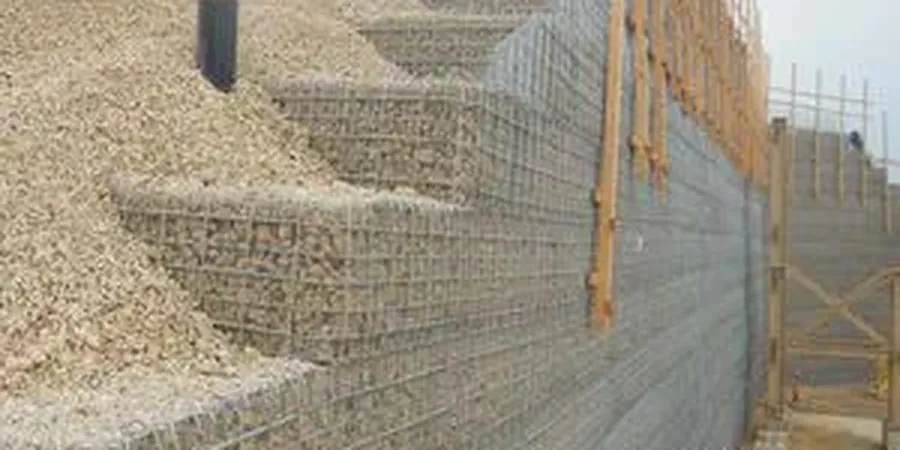
Irvine's alluvial soils provide good friction angles for MSE reinforcement, but groundwater and seismic loads demand careful drainage design and solid facing connections.
Methodology and scope
- Reinforcement type (geogrid or metallic strip) based on corrosion potential and service life
- Backfill friction angle and gradation per ASTM D2487
- Allowable settlement and differential movement criteria
- Seismic acceleration coefficients from ASCE 7 for the Irvine area
Local considerations
A commercial development at the Irvine Business Complex recently faced wall bulging six months after installation. The cause was insufficient drainage behind the reinforced zone — water built up during a wet winter and reduced the friction between soil and reinforcement. We redesigned the system with a wider drainage blanket and a secondary geocomposite drain. In Irvine, the combination of occasional heavy rainfall and seismic shaking makes drainage design just as critical as the reinforcement layout. Overlooking it can lead to costly repairs or even wall failure.
Applicable standards
ASCE 7-16 (Minimum Design Loads for Buildings and Other Structures), IBC 2021 (International Building Code), ASTM D6635-01 (Standard Test Method for Performing the Flat Plate Dilatometer), AASHTO LRFD Bridge Design Specifications (Section 11: Walls)
Associated technical services
MSE Wall Design and Detailing
Full structural design of mechanically stabilized earth walls including reinforcement layout, facing connections, drainage design, and seismic stability checks. We prepare stamped engineering drawings and specifications for permit submittal.
Backfill Testing and Quality Control
Laboratory testing of proposed backfill materials (gradation, compaction, shear strength) and field density testing during construction. We verify that the placed fill meets the design parameters for friction angle and unit weight.
Typical parameters
Frequently asked questions
What is the typical cost range for MSE wall design in Irvine?
The cost for MSE wall design in Irvine typically ranges between US$1,160 and US$4,220, depending on wall height, length, and site complexity. This includes geotechnical investigation, structural design, and construction documentation. Contact us for a project-specific quote.
How long does the MSE wall design process take?
A standard MSE wall design for a typical commercial project in Irvine takes 3 to 6 weeks from the start of subsurface exploration to final stamped drawings. Faster turnaround is possible for smaller walls or when existing geotechnical data is available.
What soil conditions in Irvine are best for MSE walls?
MSE walls perform well in Irvine's alluvial sands and silts with friction angles above 30 degrees. Clays with high plasticity or organic soils require special treatment or removal. Older terrace deposits near the foothills offer the best reinforcement pullout capacity.
Do MSE walls need special seismic design in Irvine?
Yes, Irvine is in Seismic Design Category D per ASCE 7-16, requiring dynamic analysis and reinforcement connection detailing for seismic loads. We design for peak ground acceleration values up to 0.45g and include horizontal acceleration factors in the internal stability calculations.