Irvine sits on the eastern edge of Orange County, where the Pacific Ocean moderates temperatures but also concentrates winter rainfall into short, intense storms. The city's master-planned terrain blends alluvial fans, ancient terrace deposits, and steep canyon slopes. These conditions make soil erosion analysis a practical necessity before grading or hillside development. Without proper evaluation, runoff can undermine retaining walls, clog drainage systems, and expose foundations. We apply the Revised Universal Soil Loss Equation (RUSLE2) alongside field infiltration tests to quantify erosion risk. For projects in the foothills near Bommer Canyon, we also incorporate a resistividad electrica SEV survey to map subsurface layering that controls seepage paths.
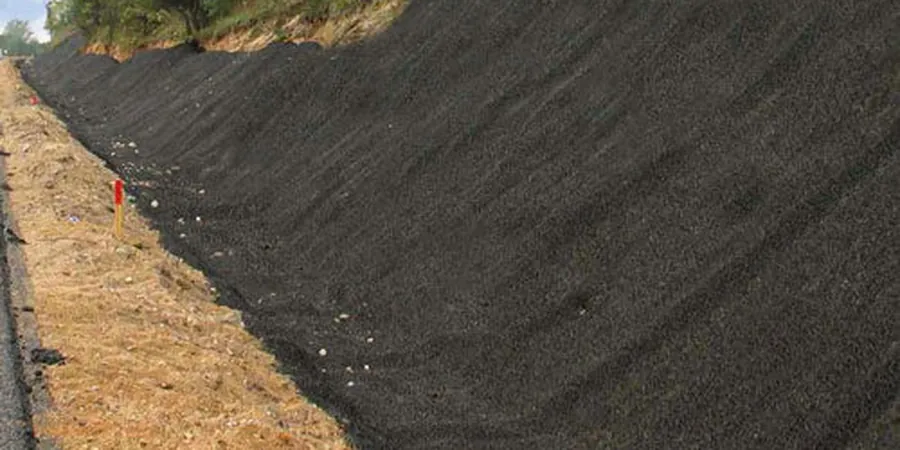
Irvine's clay-rich hillsides can lose up to 15 tons per acre per year without proper sediment controls.
Methodology and scope
- RUSLE2 modeling with local rainfall erosivity factor (R = 85-110)
- Field infiltration with double-ring infiltrometer
- Laboratory dispersion and slaking tests
- Sediment basin sizing per CASQA criteria
Local considerations
The Santiago Formation underlies much of Irvine's hillsides. It consists of weakly cemented sandstone and siltstone interbedded with claystone. When exposed to rainfall, these materials rapidly slake and rill. Without a proper soil erosion analysis, sediment can travel into San Diego Creek and Upper Newport Bay, triggering regulatory action. The city enforces the Irvine Grading Ordinance, which requires erosion control plans for any disturbance over 1,000 sq ft. We integrate RUSLE2 results with sediment basin sizing and outlet protection design. Our reports cite ASTM D422 for particle size and follow the State Water Board's Construction General Permit for numeric effluent limits.
Applicable standards
ASTM D422 (particle-size analysis for erodibility), RUSLE2 (Revised Universal Soil Loss Equation, USDA-ARS), California Construction General Permit (SWRCB Order 2022-0057-DWQ)
Associated technical services
RUSLE2 Modeling
Quantitative erosion prediction using local rainfall data, soil type, slope geometry, and planned cover. Delivers annual soil loss in tons/acre.
Field Infiltration Testing
Double-ring infiltrometer measurements at multiple depths. Determines steady-state infiltration rate for basin sizing and green infrastructure design.
Dispersion and Slaking Analysis
Pinhole test, double hydrometer, and Emerson crumb test. Identifies dispersive clay behavior common in the Santiago Formation.
Sediment Basin Design
Hydraulic sizing per CASQA criteria. Includes outlet structure design, sediment storage volume, and maintenance schedules for Irvine projects.
Typical parameters
Frequently asked questions
How much does a soil erosion analysis cost in Irvine?
Typical costs range between US$860 and US$2,590 depending on site size, number of test pits, and modeling complexity. A full RUSLE2 analysis with field infiltration and lab dispersion tests is usually at the higher end.
What triggers the need for an erosion control plan in Irvine?
Any land disturbance over 1,000 sq ft requires an erosion control plan under the Irvine Grading Ordinance. Disturbances over 1 acre also need coverage under the State Construction General Permit.
How does soil type affect erosion risk in Irvine?
Clay-rich soils from the Santiago Formation are highly dispersive and prone to rilling. Sandy loam on the flats has lower erodibility but higher infiltration, which can cause subsurface piping if not managed.
Do you include sediment basin sizing in the analysis?
Yes. We size sediment basins using the RUSLE2 soil loss estimate and local storm frequency data. The design follows CASQA guidelines and includes outlet protection and maintenance intervals.